Accessories & props
Sliders and gliding discs
The short answer
Sliders let you replicate some reformer carriage movement on the floor. Placed under the feet or hands on a smooth surface, they turn static positions into controlled sliding movements — the closest cheap approximation to reformer work available.
The closest thing to a carriage without a machine
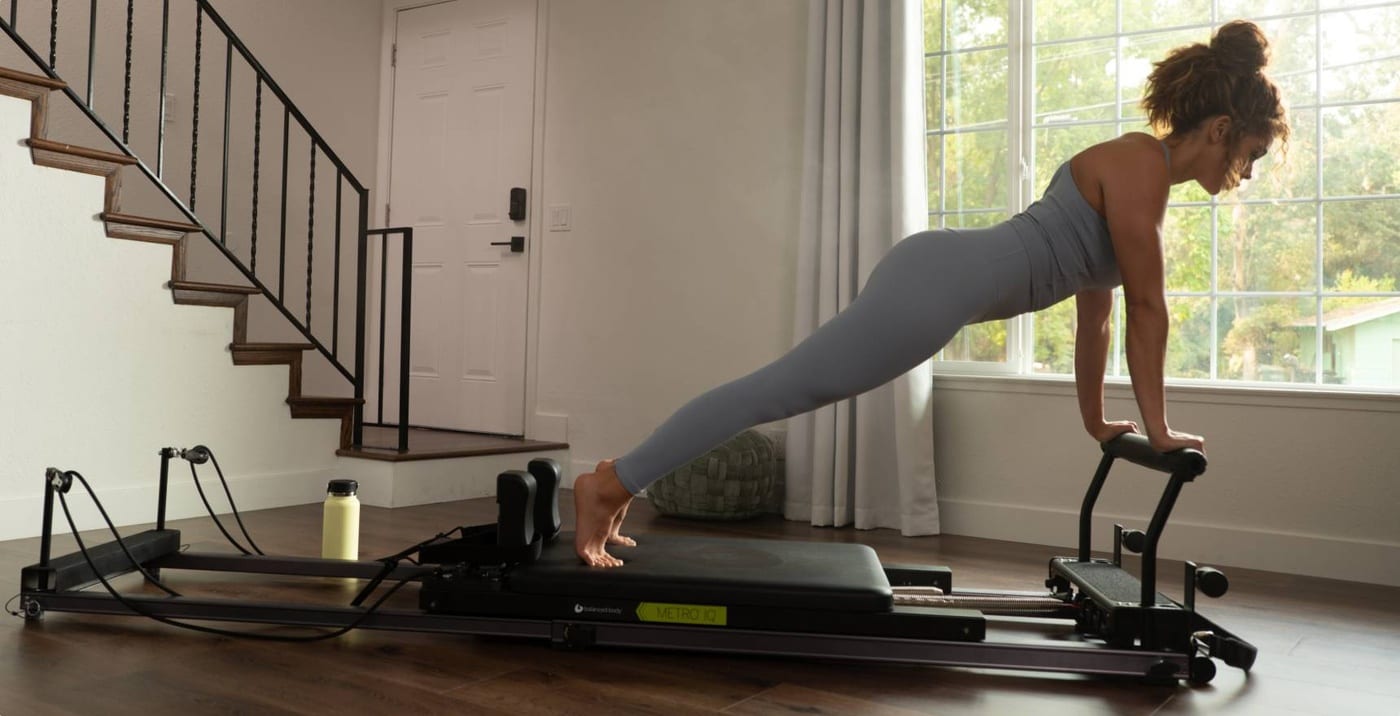
The defining feature of a reformer is that a surface slides under you and you control it. Sliders reproduce exactly that, at a tiny fraction of the price, without the springs.
Mountain climbers, hamstring curls and reverse lunges on sliders all demand the same controlled deceleration that reformer work does.
Surface determines whether they work
Most sliders are two-sided — one side for carpet, one for hard floors. Using the wrong side means either no glide at all or an uncontrolled skid.
On very grippy rubber gym flooring, neither side works well. A towel or paper plate on a hard floor is a better improvised option than the wrong slider surface.
- Two-sided discs cover carpet and hard floors
- Test the glide before loading a movement
- Furniture sliders work identically and cost less
- A towel on hard floor is a workable improvisation
What they are good for
Hamstring curls from a bridge, mountain climbers, sliding reverse lunges, and body-saw planks. All of them demand eccentric control of a limb moving away from you, which is the quality reformer work develops.
They are particularly useful for anyone training away from their equipment — they weigh nothing and fit in a bag.
Where they fall short
No resistance and no assistance. A reformer spring both opposes and supports; a slider does neither, so it cannot scale a movement down for someone who is not yet strong enough.
That makes sliders a supplement for people who already have some capacity, rather than an entry point for beginners.
Frequently asked questions
- Are sliders a good reformer substitute?
- They replicate the sliding surface but not the springs, so there is no assistance to scale a movement down. Good supplement, poor entry point for beginners.
- Do sliders work on carpet?
- Most are two-sided — a hard plastic side for carpet and a felt side for hard floors. Using the wrong side gives either no glide or an uncontrolled skid.
- What can I use instead of sliders?
- A towel on a hard floor, or paper plates on carpet. Furniture sliders from a hardware store are functionally identical and cheaper.
- What exercises use sliders?
- Hamstring curls from a bridge, mountain climbers, sliding reverse lunges and body-saw planks — all demanding eccentric control of a limb moving away from you.