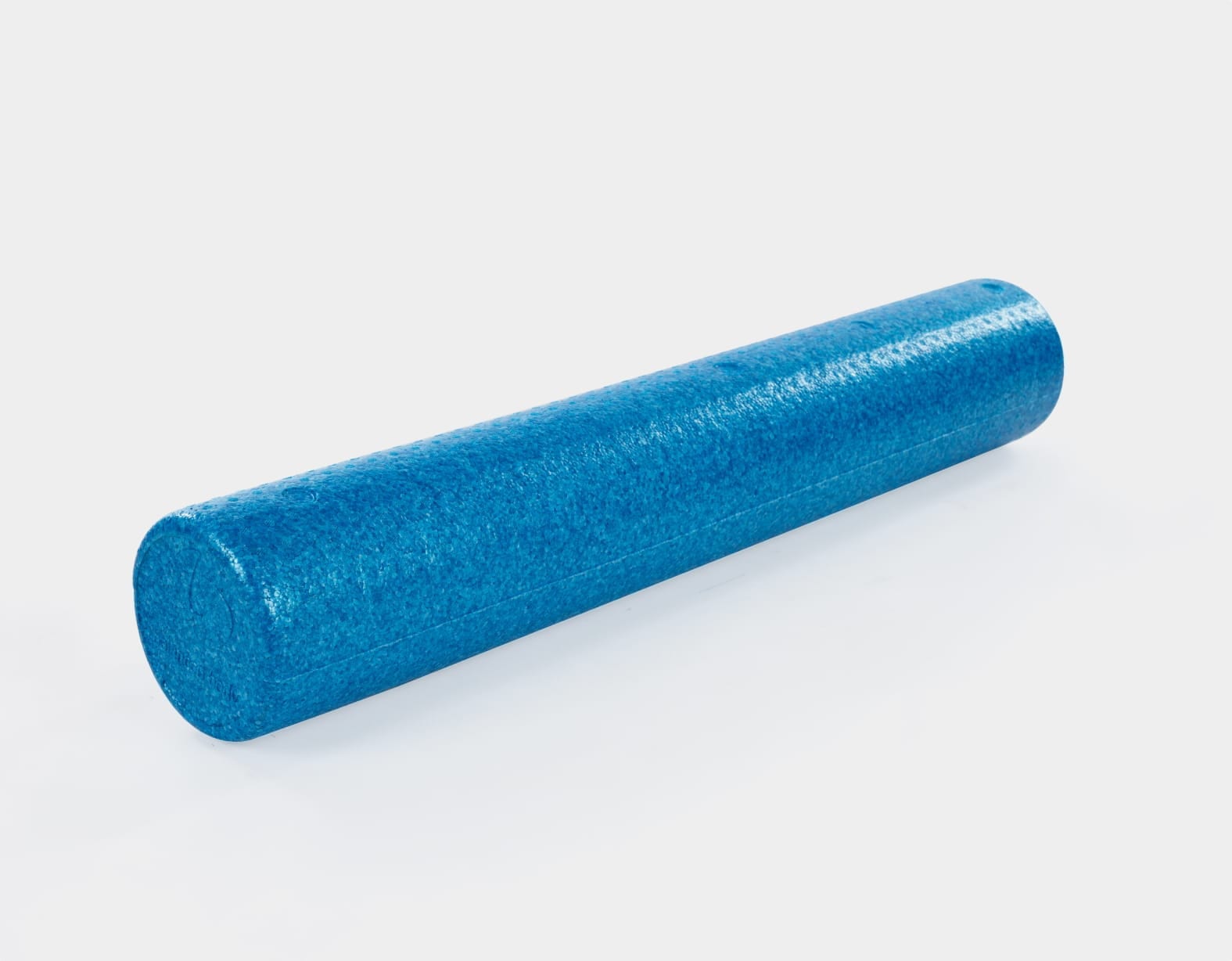
Foam Rollers
1 product
Choosing from this range
Rollers and release tools are best known for self-massage, where the evidence is mixed. In a Pilates context they earn their place differently — as unstable surfaces for balance and control work, and as supports for thoracic extension.
For those applications a firm, high-density roller is considerably more useful than a soft one, because a soft roller compresses and loses the shape that makes it work.
What to check
- High density for stability and support work; soft rollers are for massage only
- 36 in length if you want to lie along the spine
- Smooth rather than textured surface for extension support
- Avoid extending over a roller placed under the lower back
Foam Rollers — frequently asked questions
What size foam roller should I get?
A 36 inch, high-density roller. Shorter rollers cannot support the whole spine lengthwise, which rules out the most useful applications.Can I foam roll my lower back?
Extending over a roller under the lower back concentrates movement where the spine is already most extended. Keep it on the thoracic spine, above the bottom of the ribs.Is foam rolling effective?
For self-massage the evidence is mixed. In Pilates the roller is used as an instability surface and extension support, which are better-supported applications.