Technique & progression
Unilateral work and asymmetry
The short answer
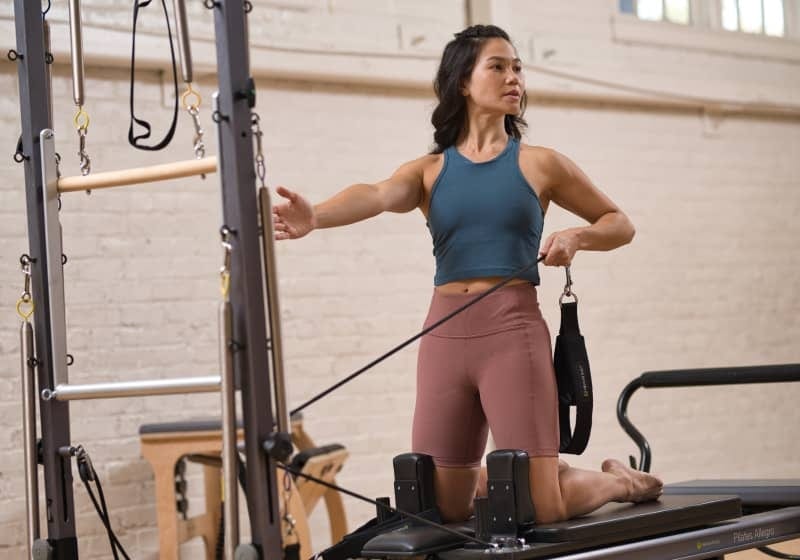
Nearly everyone has a stronger side, and bilateral exercise lets it compensate. Unilateral work — single-leg footwork, split-pedal chair work, single-strap arm work — exposes the difference and is the only reliable way to reduce it.
Bilateral work hides the problem
In two-legged footwork, a stronger leg can quietly contribute more without anything looking wrong. The set completes, the load is correct on paper, and the asymmetry is untouched.
Single-leg work removes that option entirely, which is why differences that were invisible for years appear within a few repetitions.
How to work with a difference
Start with the weaker side, and match the stronger side to what the weaker one achieved. That means deliberately under-training the strong side, which feels wrong and is correct.
Some practitioners add an extra set on the weaker side. That works too, provided the quality holds.
- Always start with the weaker side
- Match the stronger side to the weaker side’s output
- Optionally add one extra set on the weaker side
- Reassess every six weeks rather than every session
- Expect months, not weeks, for meaningful change
Some asymmetry is normal
A small difference between sides is universal and not a problem to solve. Handedness, leg dominance and years of one-sided activity all contribute, and chasing perfect symmetry is neither achievable nor useful.
What matters is a difference large enough to affect movement quality or that appeared alongside pain.
When to investigate rather than train
A marked asymmetry that appeared suddenly, or one accompanied by pain, numbness or loss of range, deserves assessment rather than more repetitions.
Training around an undiagnosed problem can entrench it.
Frequently asked questions
- Is it normal for one side to be weaker?
- Yes, universally. Handedness and years of one-sided activity make small differences normal. What matters is a difference large enough to affect movement quality.
- How do I correct an asymmetry?
- Unilateral work, starting with the weaker side and matching the stronger side to it. Expect months rather than weeks for meaningful change.
- Should I do extra reps on the weak side?
- One extra set is reasonable if quality holds. The more important habit is starting with the weaker side and not exceeding it on the stronger one.
- When should I get an asymmetry checked?
- If it appeared suddenly, or comes with pain, numbness or loss of range. Training around an undiagnosed problem can entrench it.