Care & maintenance
Replacing reformer ropes
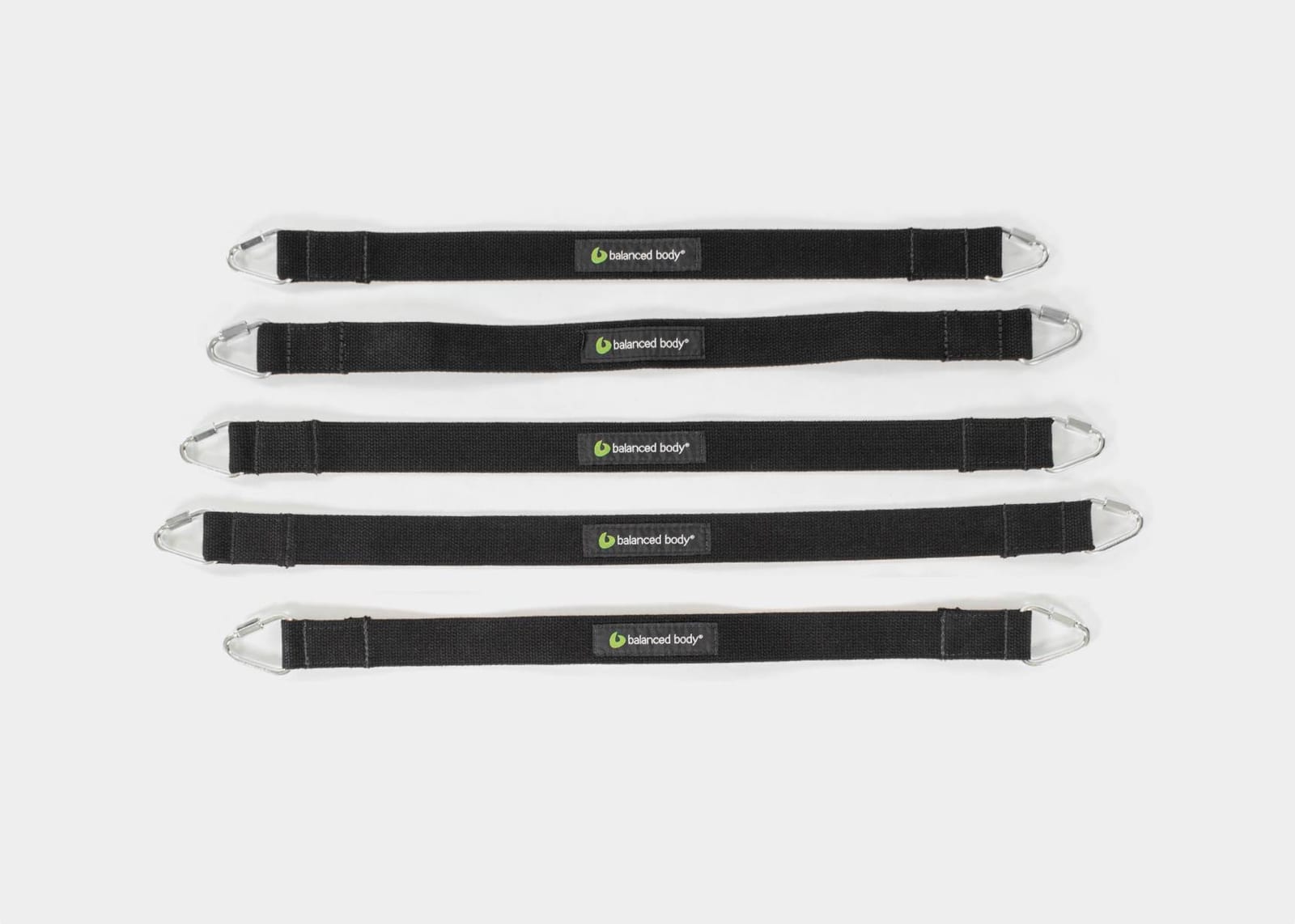
The short answer
Replace reformer ropes when fraying appears at the pulley contact points, when they have stretched enough that your settings have drifted, or annually in heavy studio use. Always replace in pairs — a new rope on one side and a stretched one on the other creates an asymmetry.
Where ropes actually wear
Wear concentrates where the rope passes over the pulley, because that is where it flexes under load thousands of times. The visible length in the middle usually looks fine long after the working section has degraded.
Inspect there specifically, running the rope through its full travel and checking the section that contacts the pulley at both ends of the range.
Stretch is the silent problem
Ropes lengthen gradually. Because it happens to both ropes at similar rates, nothing feels obviously wrong — the carriage just sits slightly differently at the start position than it used to.
If you find yourself shortening the rope adjustment repeatedly over months, that is stretch, and it eventually runs out of adjustment.
- Fraying at the pulley contact points
- Stiffness or glazing where the rope passes through hardware
- Adjustment running out at the short end
- Visible difference in length between the two sides
- Any core showing through the outer sheath
Always in pairs
A new rope alongside a stretched one means one side of every exercise starts from a different position. The client feels it as an asymmetry, and a teacher may misread it as a body issue rather than an equipment one.
Ropes are inexpensive relative to the confusion a mismatched pair causes.
Setting length after replacement
Follow the manufacturer’s procedure. The reference position is arms fully extended with the carriage home and the springs just taut — no slack and no movement of the carriage.
Set both sides to the same length by measurement rather than by eye, then check by loading each side independently.
Frequently asked questions
- How often should reformer ropes be replaced?
- Annually in heavy studio use; every few years at home. Replace sooner if fraying appears at the pulley contact points.
- Where do reformer ropes wear first?
- At the section that passes over the pulley, where the rope flexes under load. The middle length usually looks fine long after the working section has degraded.
- Can I replace one rope?
- You should not. A new rope alongside a stretched one creates an asymmetry that clients feel and teachers may misread as a body issue.
- How do I set rope length correctly?
- Arms fully extended, carriage home, springs just taut with no slack. Set both sides by measurement rather than by eye.