Technique & progression
Practicing Pilates alone
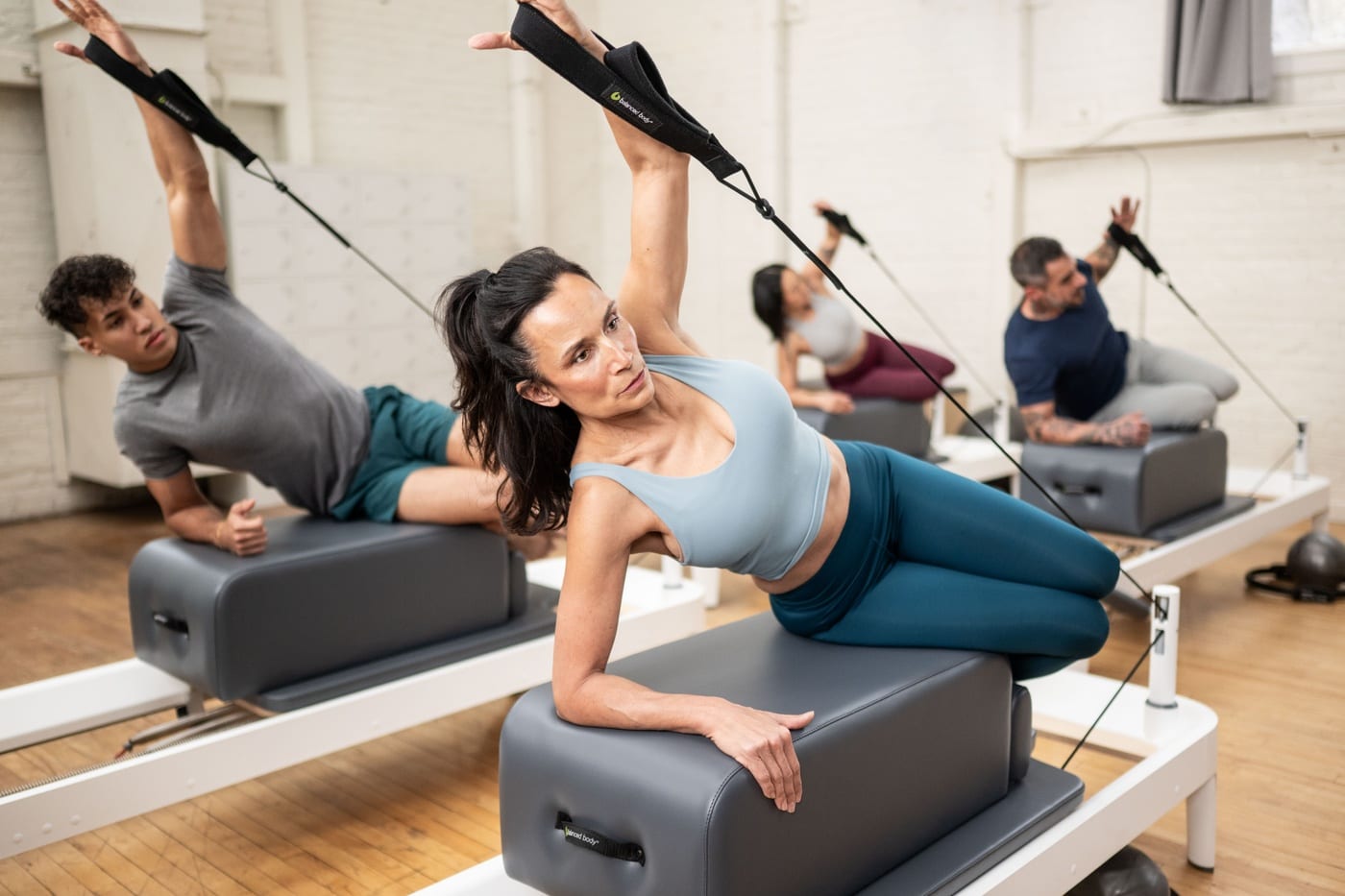
The short answer
Training alone works if you build in feedback: a mirror for alignment, video of yourself for review, a written sequence so you do not drift toward what is comfortable, and a periodic session with a teacher to catch what you cannot see.
The problem with training alone
Nobody sees your compensations, and you cannot feel most of them — that is precisely what makes them compensations. Over months they become embedded patterns that take far longer to correct than they would have taken to prevent.
This is the single genuine argument against home practice, and it is solvable rather than fatal.
Build in feedback
A mirror on the long side of the machine gives live alignment feedback. Filming a set occasionally and watching it back shows you things a mirror cannot, particularly in supine work.
A periodic session with a teacher — every six to eight weeks — catches what neither can. That cadence costs little and preserves most of the benefit of supervised practice.
- Mirror along the long side of the machine
- Film one set occasionally and review it
- Written sequence, followed rather than improvised
- One teacher session every six to eight weeks
- Vary the sequence deliberately, not by mood
Write the sequence down
Practicing alone drifts toward what feels good, which means the things you find hard quietly disappear from the program. A written sequence prevents that without requiring any discipline in the moment.
Review and update it every six weeks rather than changing it session to session.
What to be cautious with alone
Standing and kneeling work on the carriage, and any advanced flexion-with-rotation exercise. Both have narrow margins and genuine consequences, and both are worth learning supervised first.
Everything supine and seated is reasonable to practice alone once you have learned it properly.
Frequently asked questions
- Can I do Pilates alone at home?
- Yes, provided you build in feedback — a mirror, occasional video review, a written sequence, and a teacher session every six to eight weeks.
- How do I know if my form is right?
- A mirror for live feedback, filming a set for what the mirror cannot show, and a periodic teacher session for what neither can.
- Why write down my sequence?
- Practicing alone drifts toward what feels comfortable, so difficult exercises quietly disappear. A written sequence prevents that without needing discipline in the moment.
- What should I not practice alone?
- Standing and kneeling work on the carriage, and advanced flexion-with-rotation exercises. Both have narrow margins and are worth learning supervised.