Buying guides
Choosing the best Pilates reformer for home use
The short answer
The best home Pilates reformer is the one that fits your room with working clearance, carries a weight rating above your body weight with margin, and has a spring gradient you will not outgrow. For most homes that means a full-length machine of about 8 feet, not a compact folding model.
Home does not mean compromised
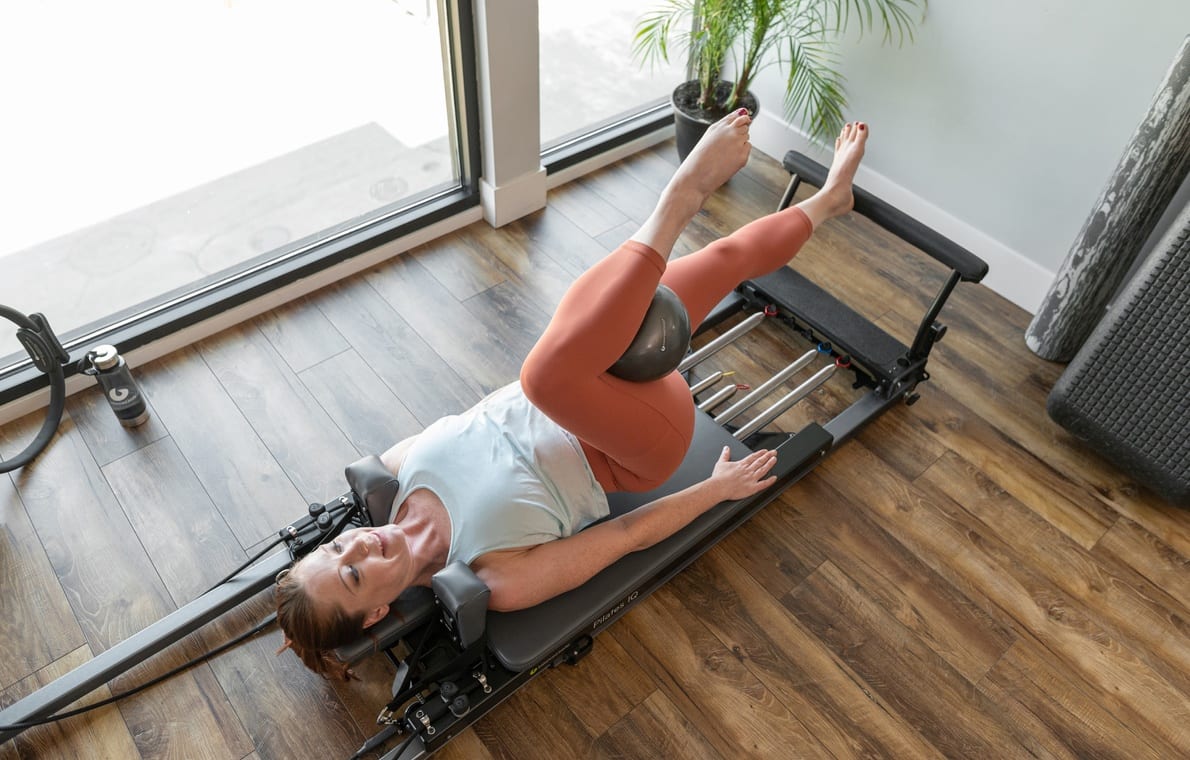
The phrase "home reformer" has come to imply a lighter, shorter, cheaper machine. It does not need to. The only genuine differences a home setting imposes are footprint and, sometimes, the need to move the machine out of the way. Everything else — spring quality, carriage glide, weight rating — should be judged by exactly the same standard as a studio machine, because your body does not know where the machine is installed.
The most common regret among home buyers is not that they spent too much. It is that they bought a machine short enough or light enough to feel unstable, and then stopped using it.
Measure the working footprint, not the machine
A reformer is roughly 8 feet long and 2 feet wide, but the space it needs is larger. You need clearance at the foot end for the carriage to travel, room at the head end for the tower or shoulder rests, and about 2 feet along at least one side to get on and off and to reach the springs.
In practice, plan for a working area of about 10 feet by 6 feet. If your room cannot give you that, a folding machine genuinely is the right answer — but choose one that folds because it was designed to, not one that is short in order to seem to.
- Machine footprint: about 8 ft × 2 ft 3 in
- Carriage travel clearance: 18–24 in beyond the foot end
- Access side: 24 in minimum, 36 in comfortable
- Ceiling height for a tower: 7 ft 6 in absolute minimum
Noise is the thing home buyers underestimate
In a studio, ambient noise and music cover a lot. In a spare room above a sleeping household, carriage noise is the difference between using the machine early in the morning and not. This is entirely a function of bearing quality and rail finish.
If you can, listen to a machine at the end of its travel with springs loaded. That is where a cheap carriage announces itself.
Where to spend and where to save
Spend on the carriage and springs; they define the experience and cannot be upgraded later. Save on accessories — a box, jumpboard and pole can be added in year two, and buying them bundled rarely saves money.
One genuine exception: if you know you will want a tower, buying a reformer designed to accept one is far cheaper than replacing the machine later.
The three questions that narrow it fastest
First: will the machine live set up, or be stored between sessions? A fixed frame is stiffer, quieter and cheaper, but only works if you have a room that can keep 10 ft × 6 ft permanently clear. If it has to be put away, you need a folding or upright-storing machine and should accept the small premium.
Second: who else will use it? Weight rating and adjustment range both need to cover the most demanding user, not the average of two people. This is the specification most often set by the wrong number.
Third: is the room above a living space? If so, carriage noise and bearing quality move from a nice-to-have to the thing that determines whether you can train early in the morning.
What "home reformer" should not mean
The label has drifted to imply a lighter, shorter, cheaper machine, and that drift costs buyers real money. The only differences a home setting genuinely imposes are footprint and, sometimes, storage. Spring quality, carriage glide and weight rating should be judged by exactly the same standard as a studio machine, because your body cannot tell where the machine is installed.
The most common regret among home buyers is not overspending. It is buying a machine short enough or light enough to feel unstable, using it for two months, and then not using it at all.
A realistic first-year budget
The machine is most of it, but not all of it. Planning for the full figure up front prevents the common pattern of buying a reformer and then discovering that the box, pole and freight add another 20%.
| Item | Range | Notes |
|---|---|---|
| Reformer | $1,500–$2,500 | Where the budget should go |
| Freight | $0–$400 | Free over $500 here; otherwise budget for it |
| Sitting box and pole | $150–$300 | The accessory that adds most |
| Mat | $40–$70 | For warm-ups and mat repertoire |
| A few private sessions | $200–$500 | Cheaper than unlearning bad habits later |
| Total | $1,890–$3,770 |
Frequently asked questions
- Is a home reformer as good as a studio reformer?
- A well-specified home reformer is mechanically identical to a studio one. The difference is duty cycle — studio machines are built for 8+ hours of use a day. For one or two users, a good home machine will last just as long.
- How much space do I need for a home reformer?
- Plan for about 10 ft × 6 ft of working area: the machine itself is roughly 8 ft × 2 ft 3 in, plus carriage clearance at the foot end and at least 2 ft of access along one side.
- Are folding reformers any good?
- The good ones are genuinely good, and the compromise is real: folding mechanisms add joints, and joints add potential play. Buy a folding machine if you will actually fold it. If it will live set up, buy a fixed frame instead.
- Do I need a tower at home?
- Not in the first year. Buy a tower-ready reformer to preserve the option, and add the tower once your practice has moved past the base repertoire — if it does.
- What if my ceiling is low?
- A plain reformer has no ceiling requirement for supine and seated work. Below about 7 ft 6 in, rule out a tower and a jumpboard, and be cautious with standing work on the carriage.