Workouts & exercises
A beginner reformer workout
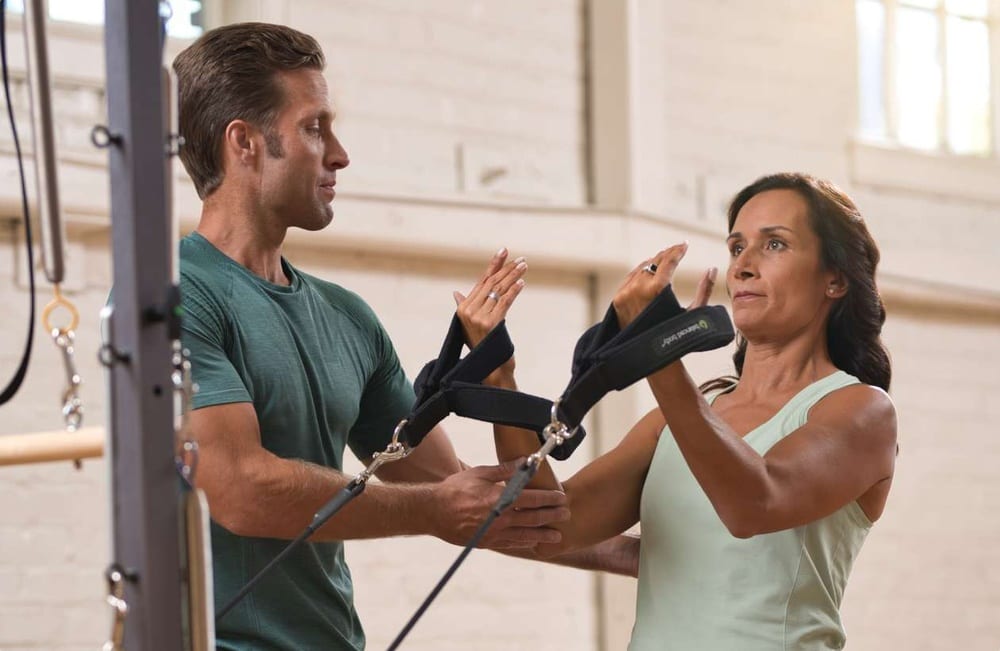
The short answer
A solid first reformer session is six exercises: footwork, leg circles, short spine, arm pulls sitting, knee stretches and long stretch. Together they cover pushing, pulling, spinal articulation and stability, and they take about 30 minutes at a beginner pace.
Start with footwork, always
Footwork is where you learn the machine. It teaches you how the carriage responds, how much spring you need and what a controlled return feels like — and it does all that in a position where you cannot fall off.
Three or four springs is a normal beginner setting. The carriage should move smoothly and return under control rather than snapping home; if it snaps, reduce the spring or slow the tempo.
The six-exercise sequence
Run these in order. Each one prepares something in the next, and the sequence moves from most supported to least.
- Footwork — 3–4 springs, 8–10 reps each foot position
- Leg circles in straps — 1–2 springs, 5 circles each direction
- Short spine — 2 springs, 5 reps, stop if the neck loads
- Seated arm pulls — 1 spring, 8–10 reps
- Knee stretches — 2 springs, 8 reps round back then flat back
- Long stretch — 2 springs, 5 reps, only once the plank position is solid
What to pay attention to
The return, not the push. Almost everyone controls the effort phase and lets the carriage return too fast. The eccentric return is where most of the benefit lives, and it should take at least as long as the push.
Also watch the ribs. If the lower ribs flare away from the pelvis during arm or leg work, the spring is too heavy for your current control — reduce it rather than compensating.
What to do before the first repetition
Set the machine up before you get on it. Rope length set so that with arms extended the carriage is home and the springs are just taut. Footbar at a height that lets you start footwork with hips and knees comfortable. Shoulder rests spaced so they contact your shoulders without pressing into your neck.
These three take ninety seconds and determine whether the session works. A machine set up for someone else is the most common reason a first session feels wrong.
A four-week progression from this session
The six exercises above are a complete first session. Rather than adding exercises immediately, spend the first month improving how you do them — the pattern is what you are building, and adding volume before control simply embeds whatever you are currently doing.
| Week | Focus | Change |
|---|---|---|
| 1 | Learn the six exercises | Two sessions, no additions |
| 2 | Slow the return | Push for two, return for three |
| 3 | Increase range | Full range on the same springs |
| 4 | Add two exercises | Bridging and side-lying series |
Signs you are ready to progress
You can hold position through the last repetition of every set. The carriage returns under control rather than arriving with a knock. You are not holding your breath. And the exercises feel repeatable rather than requiring full concentration to survive.
If any of those is not true, another week at the same level is a better investment than a new exercise.
Frequently asked questions
- How many springs should a beginner use?
- Three or four for footwork, one or two for arm and leg strap work. If the carriage snaps home rather than returning under control, reduce the load.
- How long should a beginner reformer session be?
- About 30 minutes. Fatigue degrades technique quickly at the start, and a shorter session done well beats a long one done poorly.
- Can I learn the reformer from videos?
- You can learn the sequence, but not whether you are doing it well. Three to six in-person sessions first will save you months of embedding compensations.
- How long should my first reformer session be?
- About 30 minutes. Technique degrades quickly with fatigue at the start, and a shorter session done well beats a longer one done poorly.
- Should I be sore after my first session?
- Mild soreness in unexpected places — deep abdominals, inner thighs, hip rotators — is normal and should fade within three days. Sharp pain during the session is different and means stop.