Accessories & props
Resistance bands for Pilates
The short answer
Resistance bands substitute reasonably for reformer strap work when traveling or training without equipment. They provide the same ascending resistance curve as springs, though with less consistency and no assistance option, and they perish and need regular replacement.
What they replicate and what they don’t
Like springs, bands provide resistance that increases with stretch, so the loading curve is broadly similar to reformer strap work. That makes them a decent travel substitute for arm and leg strap exercises.
What they cannot do is assist. A reformer spring anchored at the far end supports a movement; a band anchored to a door does not. Much of the reformer repertoire depends on that assistance, and bands do not replace it.
Flat bands versus tubes versus loops
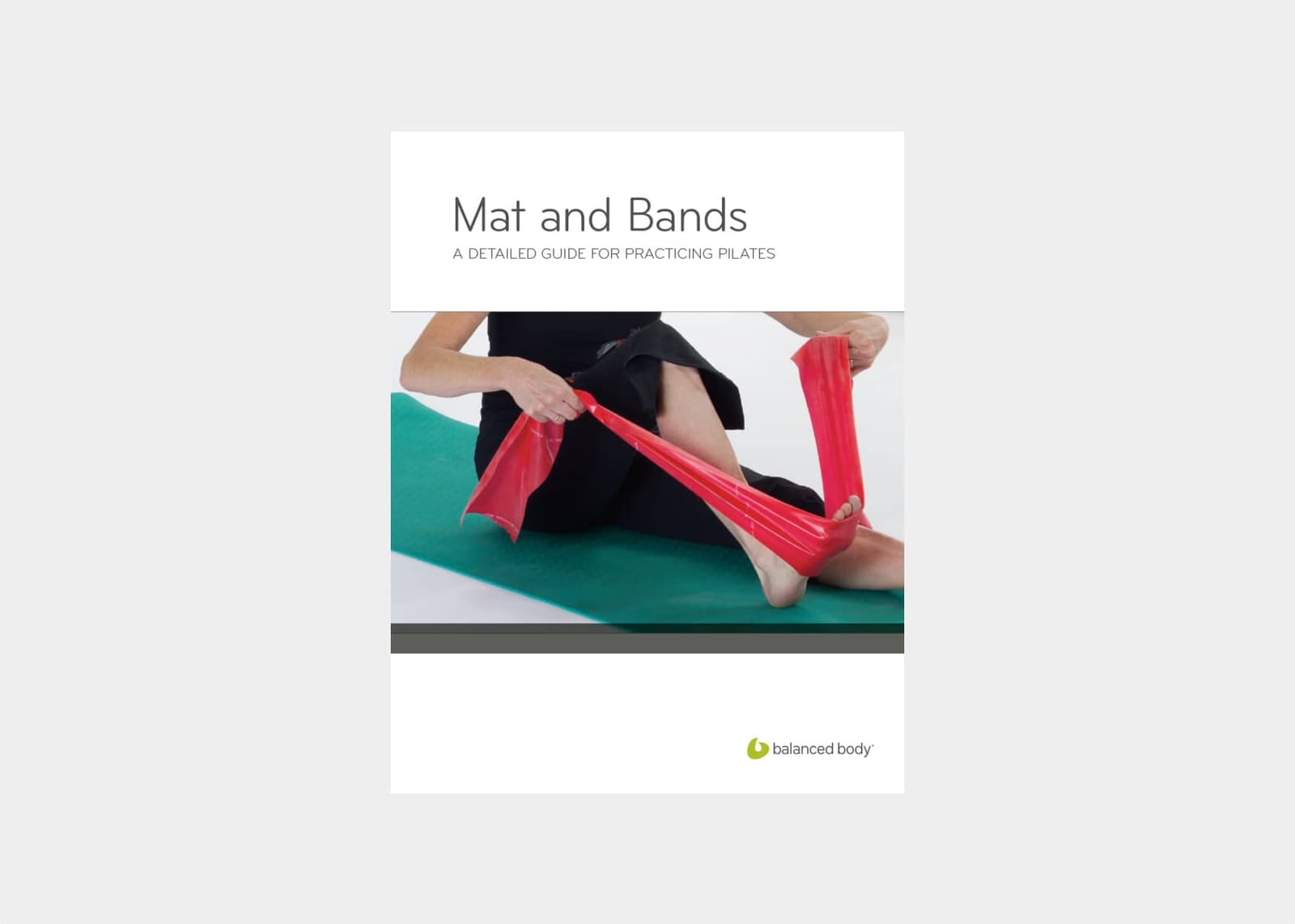
Flat therapy bands are the most versatile and the closest to Pilates use — they can be wrapped, held at any length and used against the feet. Tubes with handles are more comfortable to grip but less adaptable. Continuous loops suit lower-body work specifically.
For Pilates specifically, flat bands are the standard.
| Type | Best for | Limitation |
|---|---|---|
| Flat therapy band | General Pilates, any length | Can be hard on bare hands |
| Tube with handles | Comfortable pulling work | Fixed length, less adaptable |
| Continuous loop | Lower body, lateral hip work | Limited upper-body use |
They perish, so replace them
Latex degrades with UV, heat, oil from skin and simple age. A band that snaps while stretched recoils fast and toward whoever is holding it, which is a genuine injury risk rather than an inconvenience.
Inspect for small edge tears, cloudiness or stickiness, and replace on a schedule rather than waiting for failure. Store them away from sunlight and heat.
Latex allergy
Latex bands are a genuine problem for people with latex allergy, and in a studio setting that is worth planning for. Latex-free alternatives are widely available and perform similarly.
If bands are shared in classes, having a latex-free set on hand costs little and avoids an awkward conversation.
Frequently asked questions
- Can resistance bands replace a reformer?
- Partly. They replicate the resistance curve of strap work but cannot assist a movement the way an anchored spring does, and much of the reformer repertoire depends on that assistance.
- What resistance band is best for Pilates?
- Flat therapy bands. They can be held at any length, wrapped, or used against the feet, which makes them the most adaptable to Pilates repertoire.
- How often should I replace resistance bands?
- Inspect regularly for edge tears, cloudiness or stickiness and replace on a schedule. A band snapping under stretch recoils fast toward whoever is holding it.
- Are there latex-free bands?
- Yes, and they perform similarly. Worth keeping a set in any studio where bands are shared.