Accessories & props
Footbar covers and grip accessories
The short answer
Grip socks are the most useful non-slip accessory — they prevent feet sliding on the carriage and are required by most studios for hygiene. Footbar covers add comfort and grip on bare metal bars, and are cheap to replace as wear items.
Grip socks are close to essential
The carriage and footbar are smooth by design, and bare or ordinary-socked feet slide on both. That is uncomfortable in footwork and genuinely unsafe in standing work on the carriage.
Most studios now require them, partly for safety and partly for hygiene on shared upholstery.
Choosing grip socks
Full-sole grip patterns hold better than scattered dots, particularly on the footbar where contact area is small. Toe socks give slightly more articulation but many people find them uncomfortable.
Grip wears out. A pair that has gone shiny underfoot no longer grips, however new they look otherwise.
- Full-sole grip pattern rather than scattered dots
- Snug fit — loose socks slide inside themselves
- Replace when the grip pattern goes shiny
- Have spare pairs in a studio for clients who forget
Footbar covers
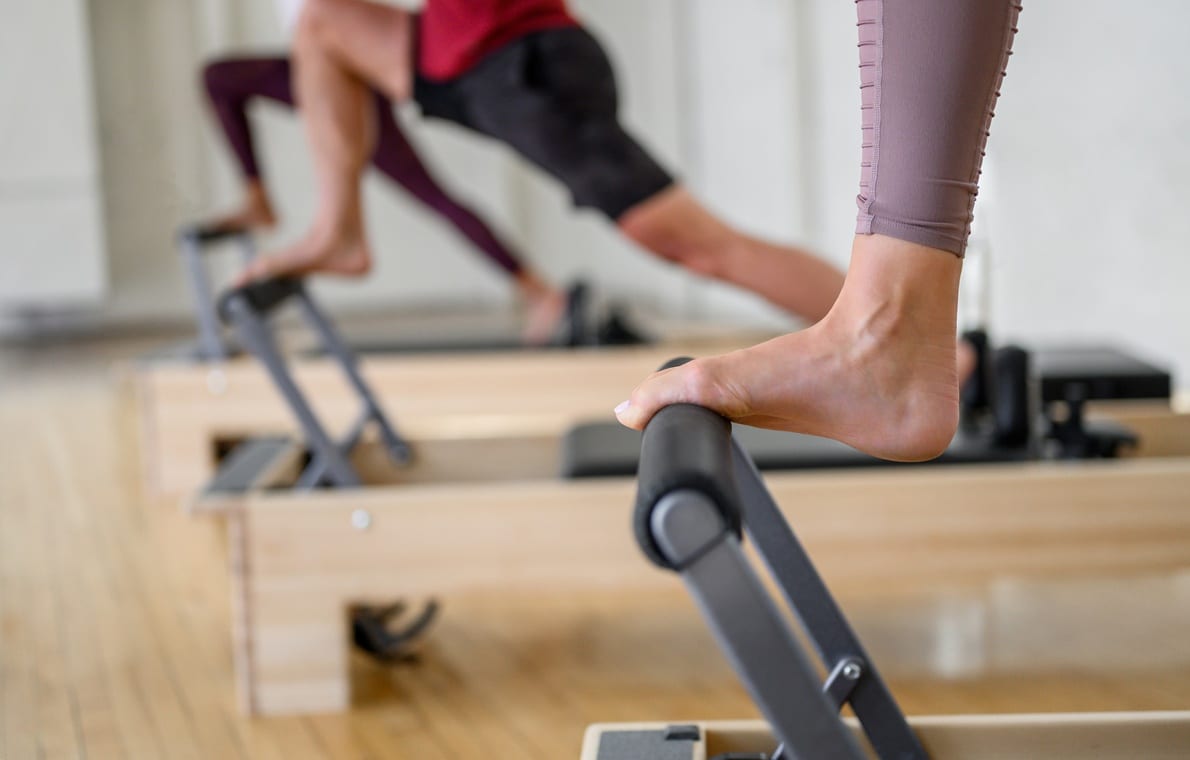
A padded sleeve over the footbar adds comfort for bare feet and grip for hands in plank work. On machines with a bare metal bar this makes a noticeable difference, particularly in cold rooms.
They are consumables — expect to replace them periodically as the surface wears smooth.
What not to use
Anything that adds slip. Some moisturisers and body oils transfer to the carriage and make it slick, which is a real hazard in standing work.
In a studio, this is worth mentioning to clients rather than assuming — it is a common cause of unexplained slipping.
Frequently asked questions
- Do I need grip socks for Pilates?
- Most studios require them, and they are genuinely useful — bare or ordinary-socked feet slide on the carriage and footbar, which is unsafe in standing work.
- What kind of grip socks are best?
- Full-sole grip patterns rather than scattered dots, in a snug fit. Replace them when the grip goes shiny underfoot.
- Are footbar covers worth it?
- On machines with a bare metal bar, yes — they add comfort for bare feet and grip for hands. They are consumables and need periodic replacement.
- Why do I keep slipping on the carriage?
- Often body oil or moisturiser transferring to the upholstery. It is a common and easily missed cause of slipping in standing work.