Technique & progression
Warm-up versus stretching in Pilates
The short answer
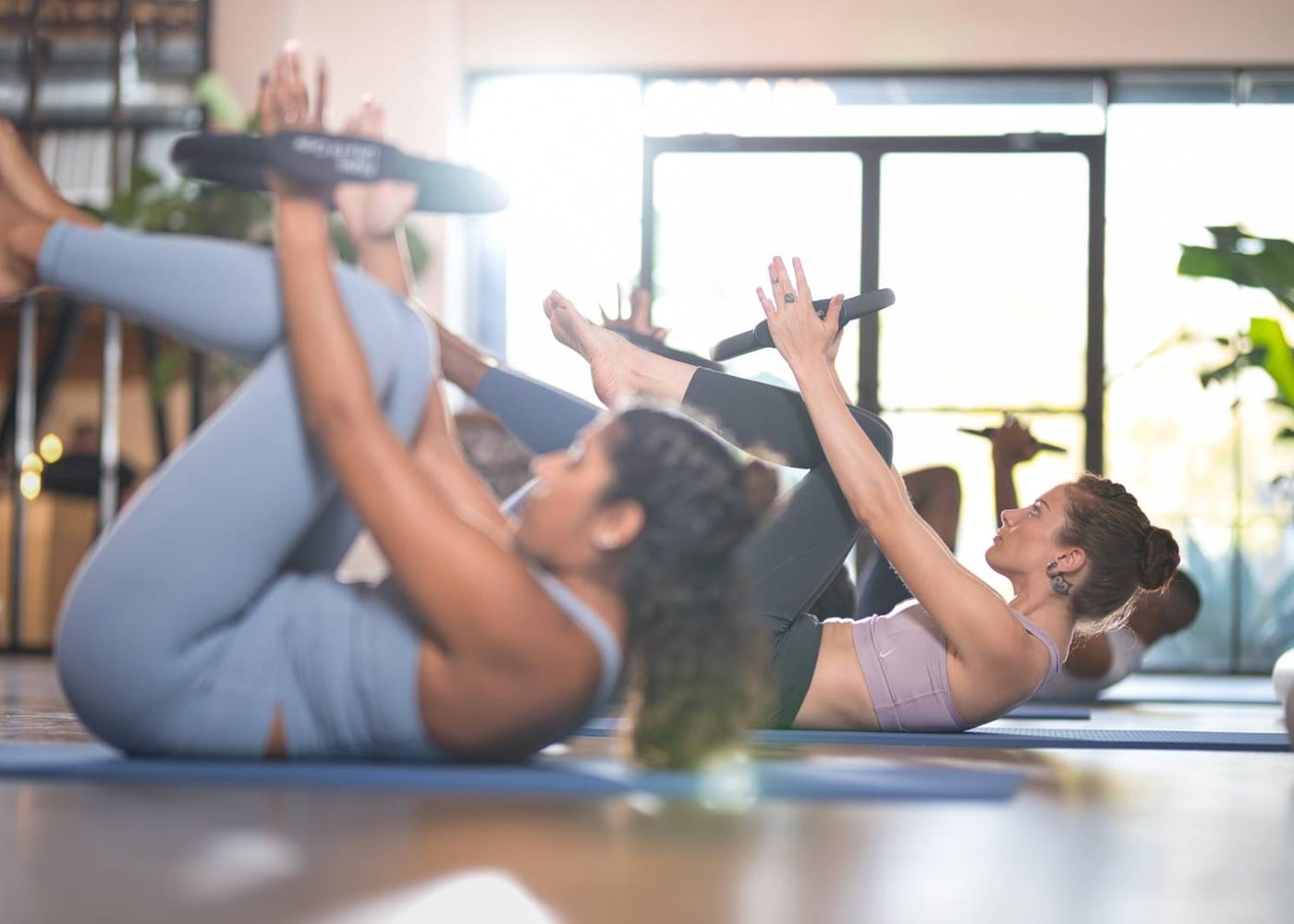
Warm up with movement through range before a session; save long static holds for afterwards. Static stretching beforehand temporarily reduces force production and control, which is the opposite of what a Pilates session needs.
Why static stretching belongs at the end
Holding a stretch for thirty seconds or more produces a short-term reduction in force output and, more relevantly for Pilates, in the stiffness that joints rely on for stability.
That effect is modest and temporary, but it works directly against a session built on control.
What to do instead
Move each joint through the range the session will demand, under light or no load. On a reformer, footwork does this better than anything else — it takes the ankles, knees and hips through range while establishing carriage control.
Five to eight minutes is sufficient. Raising heart rate is not the objective.
| Before the session | After the session | |
|---|---|---|
| Type | Movement through range | Longer static holds |
| Duration | 5–8 minutes | 5 minutes |
| Purpose | Prepare the ranges you will load | Restore range, settle the nervous system |
| Example | Footwork, leg circles, arm circles | Hamstring hold, hip stretch, spine twist |
The warm-up is also an assessment
A hip that feels restricted in leg circles or a shoulder that catches in arm circles tells you where to modify before you load it. Teachers use the warm-up this way routinely.
Training alone, the same information is available if you pay attention rather than treating it as a formality.
Do not skip it
When time is short, the warm-up is the first thing people cut and the last thing they should. It is the block that makes everything after it safe.
Cut the standing work or shorten the strap block instead.
Frequently asked questions
- Should I stretch before Pilates?
- Not statically. Long holds temporarily reduce force production and joint stiffness, which works against a session built on control. Move through range instead.
- What is a good Pilates warm-up?
- Five to eight minutes moving each joint through the ranges the session will demand. On a reformer, footwork does this better than anything else.
- When should I do static stretching?
- At the end of the session, for about five minutes. It restores range that fatigue temporarily reduced and settles the nervous system.
- What should I cut when short on time?
- Standing work first, then the strap block. Never the warm-up — it is the block that makes everything after it safe.