Accessories & props
The Pilates arc and spine corrector
The short answer
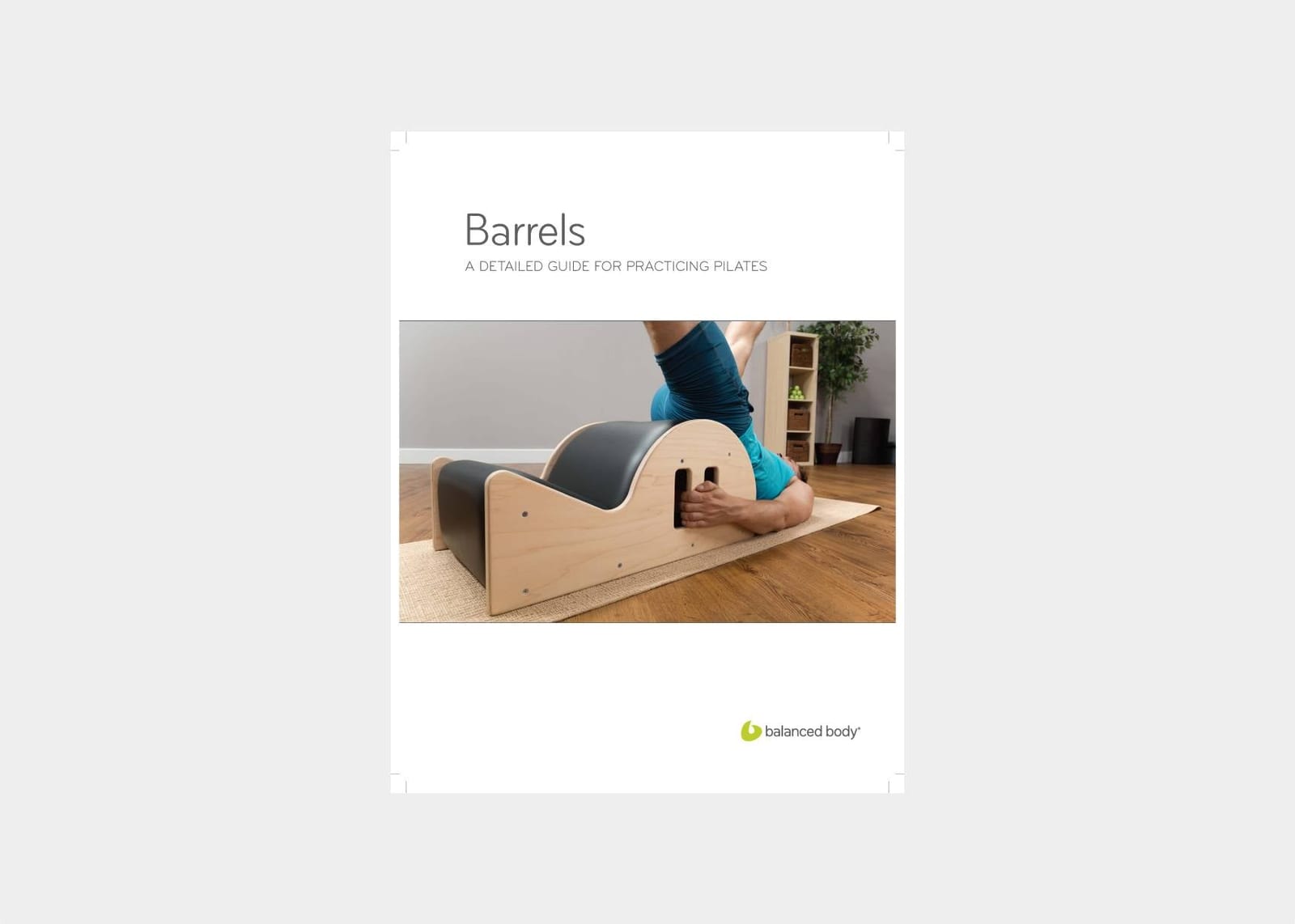
An arc is a lightweight curved prop used on the floor or on a reformer carriage for supported spinal extension. A spine corrector is a heavier, taller version with a step. Both address the same need — extension over a supported curve — at different footprints and prices.
What they do that nothing else does
Supported extension over a fixed curve is difficult to achieve any other way. On the floor, extension is limited by what you can produce actively; over an arc, gravity does the work and the curve holds the shape.
For anyone who sits all day, this is among the most valuable things in the entire equipment list, and it costs less than almost anything else.
Arc versus spine corrector
The arc is lighter, cheaper, stores flat and — importantly — fits on a reformer carriage, which combines extension with spring resistance. The spine corrector is taller, heavier, has a step for seated and standing work, and supports a deeper curve.
For a home practice with a reformer, the arc is usually the better buy. For a studio, the spine corrector earns its footprint through a wider repertoire.
| Arc | Spine corrector | |
|---|---|---|
| Weight | Light | Heavy |
| Storage | Flat against a wall | Dedicated floor space |
| On a reformer carriage | Yes | No |
| Depth of extension | Moderate | Deeper |
| Step for seated work | No | Yes |
| Relative cost | Lower | Higher |
Using it on a reformer
Placing an arc on the carriage lets you combine spinal extension with arm strap work, which loads the mid-back in an extended position. That combination is difficult to produce any other way and is one of the strongest arguments for owning an arc specifically.
Check the arc is stable on your carriage before loading it — some combinations of arc base and carriage upholstery slide.
Start conservatively
Extension over a curve can be intense for anyone who has been sitting for years, and going too far too soon produces discomfort that puts people off.
Begin with two minutes of simply lying over it, arms by your sides. That alone produces meaningful change over a few weeks.
Frequently asked questions
- What is a spine corrector used for?
- Supported spinal extension over a fixed curve, plus hip and abdominal work using the shape for leverage. It is the most useful small barrel for most practices.
- Should I buy an arc or a spine corrector?
- An arc if you have a reformer and limited space — it stores flat and fits on the carriage. A spine corrector if you want deeper extension and have the floor space.
- Can I use an arc on a reformer carriage?
- Yes, and it is the arc’s main advantage — it combines extension with spring resistance, which is hard to achieve otherwise. Check stability before loading it.
- How long should I lie over an arc?
- Start with two minutes. Extension over a curve is intense for anyone who has been sitting for years, and overdoing it early puts people off.