Equipment guides
How to choose a ladder barrel
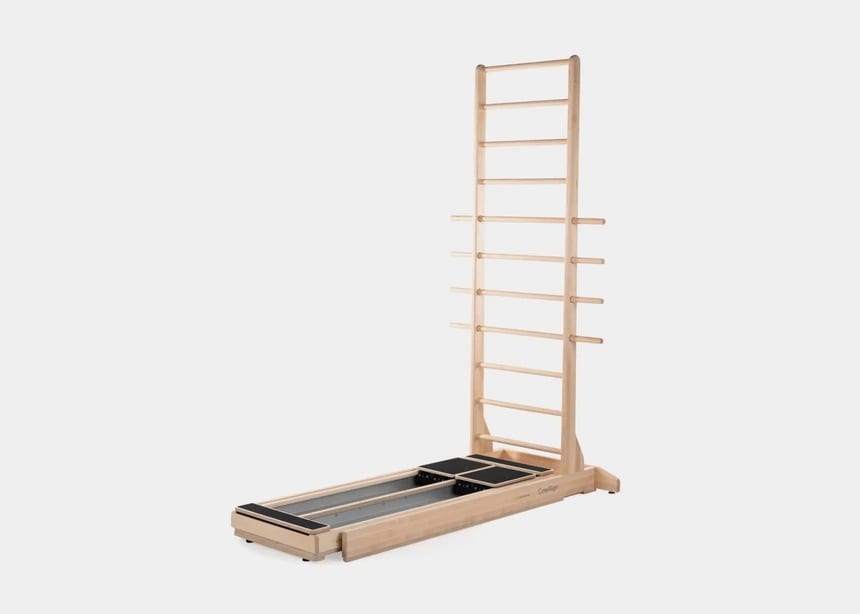
The short answer
A ladder barrel should have an adjustable gap between the barrel and ladder to suit different leg lengths, a stable heavy base, and firm padding over the curve. Fixed-gap barrels only suit a narrow range of users.
Adjustability is the key specification
The distance between the ladder and the barrel determines whether a user can reach both comfortably. A fixed gap set for average height excludes both shorter and taller users from a large part of the repertoire.
Adjustable models solve this and are worth the premium in any setting with more than one user.
Stability under load
A ladder barrel is used for deep extension and side-bending, both of which put substantial lateral load on the frame. A base that shifts or tips during side-bending is unusable and unsafe.
Weight is your friend here. Light barrels move; heavy ones stay put.
- Adjustable barrel-to-ladder gap
- Heavy, stable base that does not shift under lateral load
- Firm padding — soft padding collapses and loses the curve
- Ladder rungs comfortable to grip and stand on
- Roughly 3 ft × 2 ft 6 in of dedicated floor space
Padding firmness
The barrel’s value is the shape it holds. Padding soft enough to collapse under body weight loses that shape and the supported extension with it.
Press hard into the curve — it should compress slightly and hold, not sink.
Is it worth the footprint?
In a studio, yes, if you teach extension and side-bending work seriously. It does things no other apparatus does as well.
At home, usually not — a spine corrector delivers most of the useful extension work in a fraction of the space and cost. Buy the ladder barrel third or fourth, not first.
Frequently asked questions
- What is a ladder barrel used for?
- Deep spinal extension, side-bending and standing stretch work. It does those better than any other apparatus, which is why studios keep one.
- Do I need an adjustable ladder barrel?
- In any setting with more than one user, yes. A fixed gap set for average height excludes both shorter and taller users from much of the repertoire.
- Is a ladder barrel worth it for home use?
- Usually not. A spine corrector delivers most of the useful extension work in a fraction of the space and cost.
- How much space does a ladder barrel need?
- About 3 ft × 2 ft 6 in of dedicated floor space, and it does not fold or store away.