Care & maintenance
Humidity and Pilates equipment
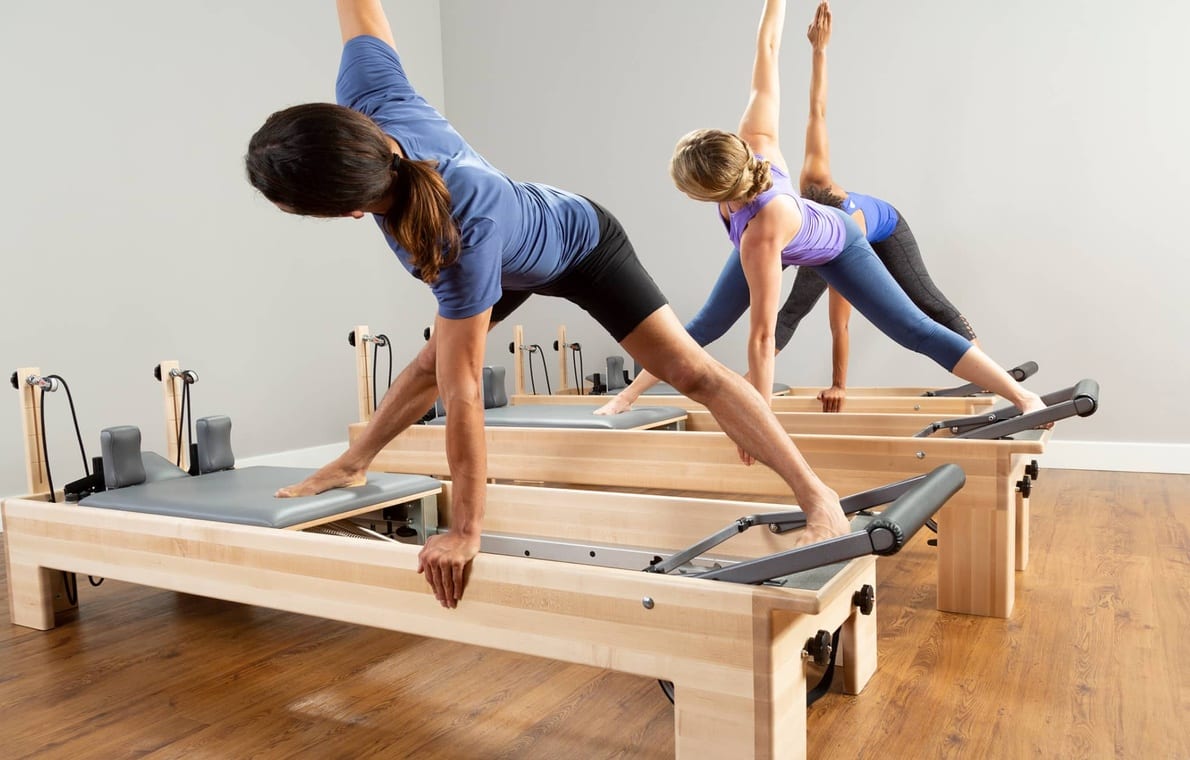
The short answer
Pilates equipment is happiest between 40% and 60% relative humidity. Below that, hardwood frames dry and joints loosen; above it, springs and hardware corrode and upholstery foam holds moisture. Aluminum-framed machines are far less sensitive than hardwood ones.
What low humidity does
Timber gives up moisture and shrinks. In a frame, that means joints that were tight become slightly loose, and over several dry winters the cumulative effect is a frame that rattles and eventually racks.
Rooms with underfloor heating or aggressive forced-air heating are the common culprits, sometimes dropping below 25% relative humidity for months.
What high humidity does
Springs and steel hardware corrode, and corrosion changes spring behavior before it becomes visible. Upholstery foam holds moisture, which produces odour and eventually degrades the foam. Hardwood swells, which can bind moving parts.
Coastal locations are worse again, because salt in the air accelerates corrosion substantially. Spring replacement cycles are genuinely shorter near the sea.
| Condition | Hardwood frame | Aluminum frame | Springs & hardware |
|---|---|---|---|
| Below 30% RH | Joints loosen | Unaffected | Unaffected |
| 40–60% RH | Ideal | Ideal | Ideal |
| Above 70% RH | Swelling, binding | Unaffected | Corrosion risk |
| Coastal air | As above | Unaffected | Accelerated corrosion |
Practical management
A cheap hygrometer in the room tells you whether there is a problem at all, and most rooms are fine. Where they are not, a humidifier in winter or a dehumidifier in summer solves it for a modest cost.
Position matters too: keeping a machine away from radiators, vents and direct sunlight avoids the localized extremes that do most of the damage.
Choosing equipment for a difficult environment
If the room genuinely cannot be climate-controlled — a garage, a coastal outbuilding, a converted barn — an aluminum-framed machine removes most of the risk. It is dimensionally unaffected by humidity and needs no corrosion protection.
Springs remain the vulnerable component in any humid environment, and shorter replacement cycles should be planned for rather than treated as a surprise.
Frequently asked questions
- What humidity is best for Pilates equipment?
- Between 40% and 60% relative humidity. Below that hardwood joints loosen; above it springs corrode and upholstery holds moisture.
- Can I keep a reformer in a humid room?
- An aluminum-framed machine tolerates it well. Springs remain vulnerable in any humid environment, so plan for shorter replacement cycles.
- Does coastal air affect Pilates equipment?
- Salt air accelerates corrosion on springs and steel hardware significantly. Wipe down after sessions and expect to replace springs more often.
- Why has my wooden reformer loosened over winter?
- Heating dries the air, timber gives up moisture and shrinks, and joints loosen. A humidifier holding the room above 40% prevents it.