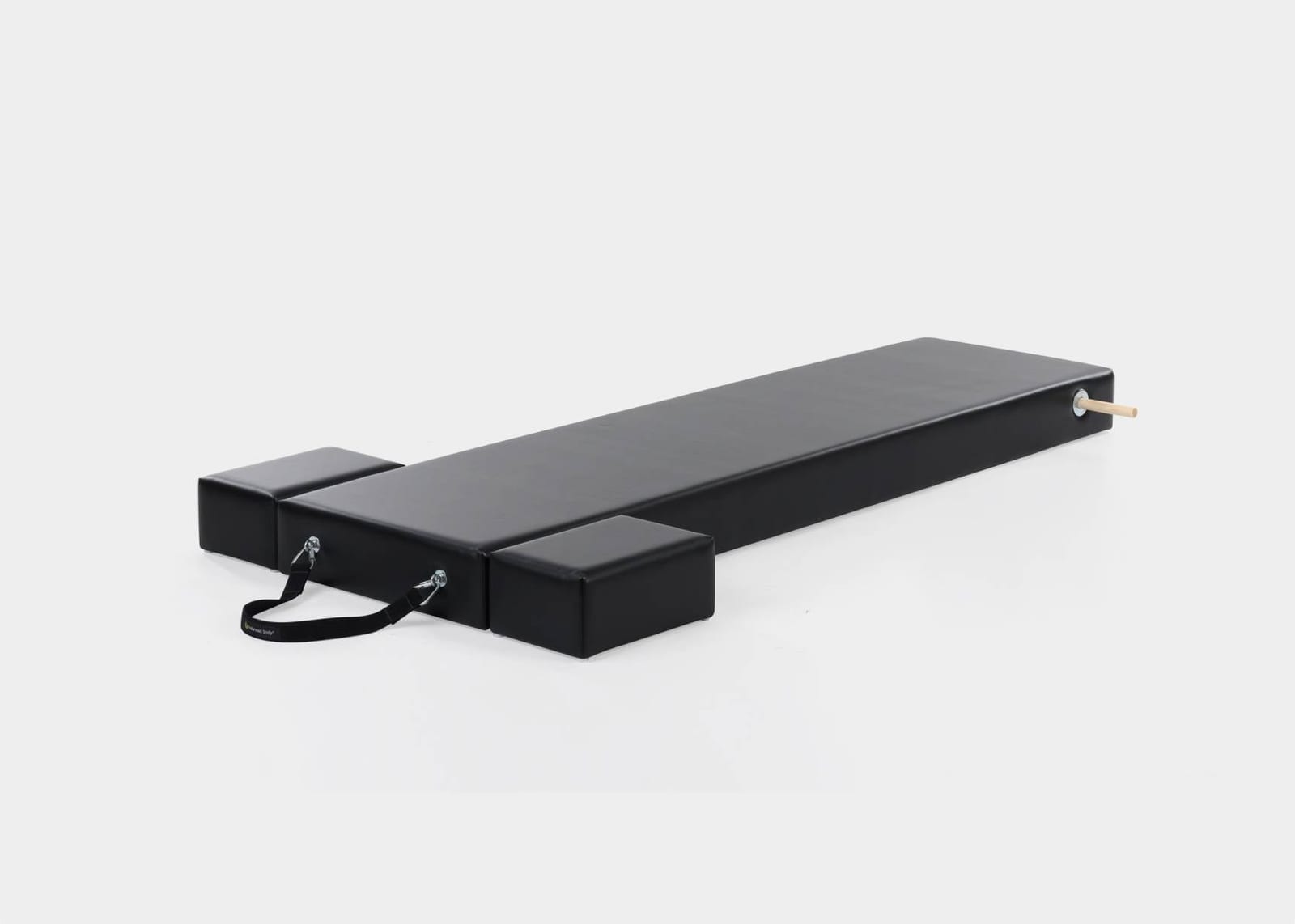
Wall Tower Accessories
4 products

Choosing from this range
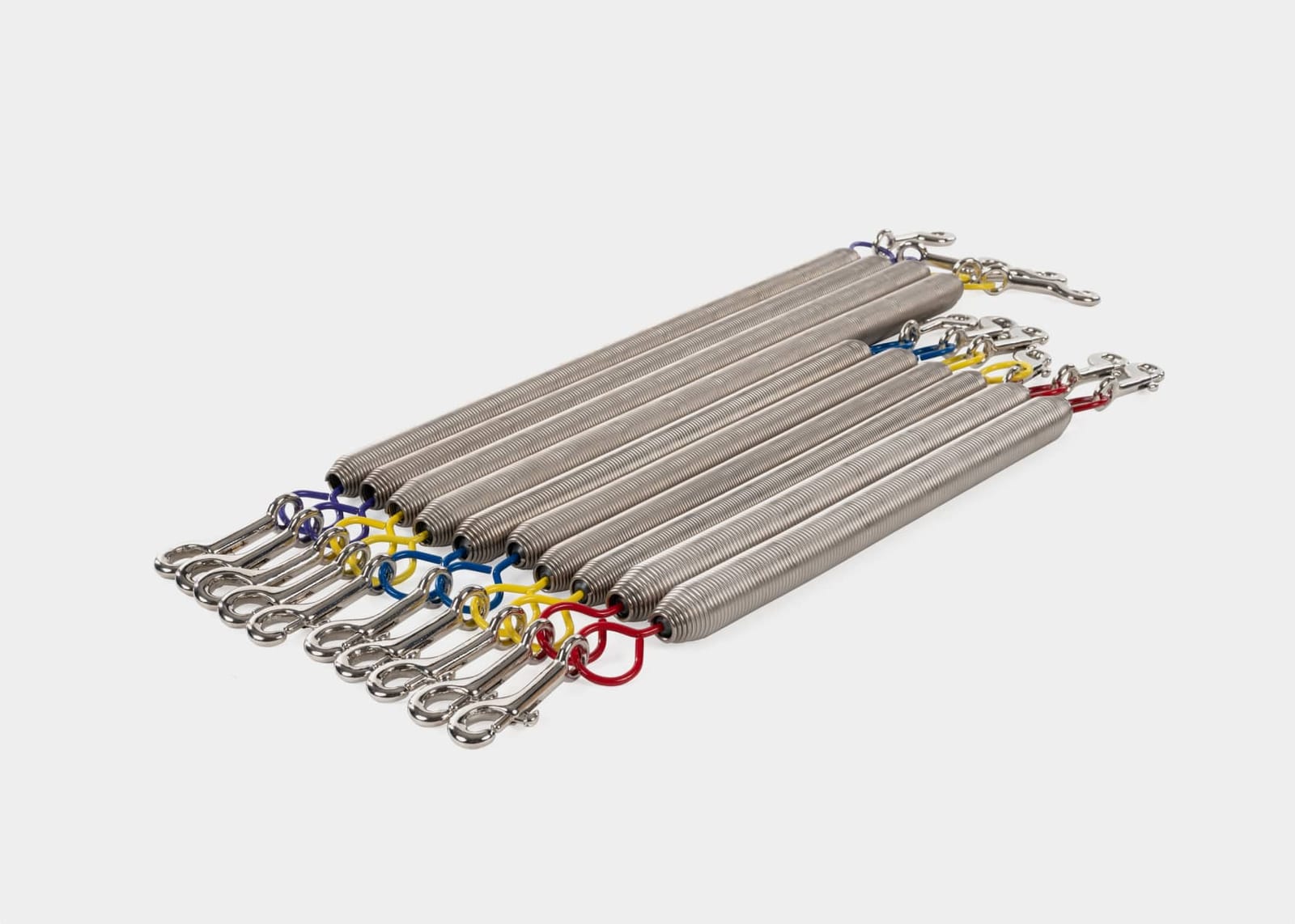
Towers and trapeze tables add spring work from a fixed overhead frame — push-through bar, roll-down bar, and leg and arm springs. That combination supports standing, kneeling and supine work that a reformer alone cannot, and it is why this apparatus dominates clinical and rehabilitation settings.
The constraint is vertical rather than horizontal. A tower adds almost nothing to the footprint but needs 7 ft 6 in of ceiling minimum, plus 12–18 in of clearance behind the head end to reach the spring attachments comfortably.
What to check before you choose a tower or Cadillac
- Ceiling height — 7 ft 6 in minimum, 8 ft comfortable
- Clearance behind the head end — 12–18 in for spring access
- Reformer compatibility — towers need model-specific mounting points
- Frame rigidity — no visible flex in the uprights under load
- Number of spring attachment points — this limits the repertoire
- Safety strap included for any suspended work
Wall Tower Accessories — frequently asked questions
What is the difference between a tower and a Cadillac?
A tower is a vertical frame mounted to a reformer, giving much of the Cadillac repertoire in reformer-sized floor space. A full Cadillac is a standalone four-post table — more versatile, roughly twice the footprint.Can I add a tower to my existing reformer?
Only if the reformer was designed to accept one — it needs specific mounting points and a frame stiff enough to carry vertical load. Check the model specification before assuming it is upgradeable.What ceiling height do I need?
7 ft 6 in as an absolute minimum and 8 ft to be comfortable, so the push-through bar can be raised fully overhead without striking the ceiling.